
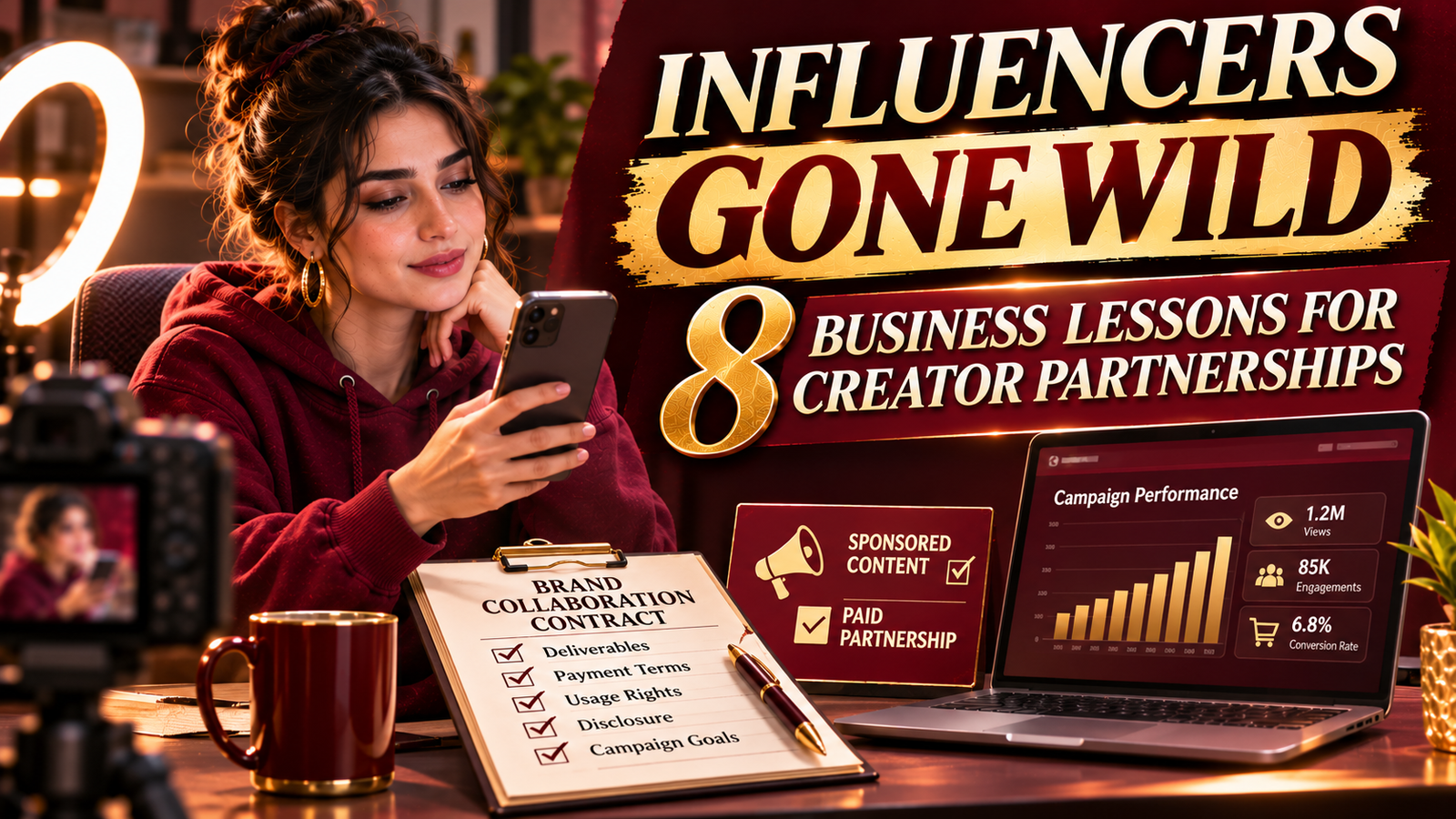
Influencer marketing has moved far beyond a simple exchange of free products for social media posts. Creators now help brands introduce products, explain services, build communities and influence purchasing decisions. Behind a campaign, however, there is a business relationship that needs planning, clear expectations and honest communication.
The phrase influencers gone wild often brings to mind unexpected online behaviour, but it can also lead readers toward a more useful question: what happens when influencers gone wild partnerships are managed poorly? A campaign can lose trust through vague advertising disclosures, unrealistic promises, unsuitable brand matches or weak measurement. These problems are not always dramatic, yet they can affect customers, creators and businesses.
This article examines eight business lessons that help brands and creators work together more responsibly. Rather than treating influencers gone wild as entertainment alone, it explores the decisions behind influencers gone wild partnerships: choosing partners, setting terms, checking claims, measuring outcomes and protecting audience trust.
1. Choose relevance before reach
A large follower count can make a creator look attractive, but reach alone does not show whether an audience is interested in a product. A specialist creator with a smaller community may be a better fit for a technical tool, a cooking product or a particular hobby. The important question is whether the creator’s usual content and audience align with the campaign.
Brands should review recent posts, audience conversations and the creator’s style before making an offer. They should look for genuine relevance rather than a single viral video. This reduces the risk that a campaign feels disconnected from the creator’s normal work. In discussions labelled influencers gone wild, mismatched promotions can be mistaken for careless behaviour when the underlying problem may be poor campaign planning.
Creators should also assess the brand. A partnership should make sense for their audience and personal standards. Accepting every offer can weaken credibility, especially when a product does not fit the creator’s usual subject. A clear selection process protects both sides and makes influencers gone wild less likely to become a shorthand for avoidable marketing mistakes. A responsible approach to influencers gone wild starts with fit, not fame. This makes influencers gone wild a useful reminder to assess the partnership before signing.
2. Put the agreement in writing
A friendly conversation is not a complete campaign plan. Before work begins, both sides should agree on deliverables, deadlines, payment, revision limits, usage rights, exclusivity and cancellation terms. They should also clarify whether the brand can reuse the content in advertisements, on its website or in other marketing channels.
Written terms prevent misunderstandings. For example, a creator may agree to publish one short video but not to provide unlimited edits or grant permanent advertising rights. A brand may expect a post to remain live for a certain period, while the creator may assume it can be removed after a campaign ends. These details should be settled in advance.
For a general overview of commercial contract considerations, the U.S. Small Business Administration’s guide to business contracts can be a starting point for business planning, although creators should seek legal advice for their own agreements and jurisdiction.
When a dispute appears under the label influencers gone wild, the public may see only the argument and not the agreement that shaped it. Clear contracts do not prevent every disagreement, but they give both parties a shared reference point. Creators should read terms carefully and seek qualified advice when an agreement involves significant money, complex rights or unusual restrictions. Brands can avoid many influencers gone wild misunderstandings by agreeing on expectations early. Clear contracts turn influencers gone wild lessons into practical safeguards.
3. Make advertising disclosures easy to notice
Audiences should be able to recognise when a creator has a material relationship with a brand. Payment is one example, but gifts, affiliate commissions, discounts and other benefits can also matter. A disclosure should be clear, understandable and placed where viewers are likely to see it—not hidden among unrelated hashtags or behind an extra click.
The U.S. Federal Trade Commission explains disclosure principles in its guide, Disclosures 101 for Social Media Influencers. Its endorsement and influencer guidance provides additional information about endorsements and reviews. YouTube creators can also review the platform’s official paid product placements, sponsorships and endorsements guidance. These are U.S. and platform-specific resources; brands and creators should check the advertising rules that apply in their own countries and to their intended audiences. Transparent disclosures help prevent influencers gone wild criticism from becoming a trust problem. This is one of the most important influencers gone wild lessons for creators promoting products.
A clear disclosure does not make a recommendation less valuable. It gives viewers information they need to judge the message fairly. If a campaign is discussed as influencers gone wild because a commercial relationship was unclear, the issue is not simply public relations; it is whether the audience received transparent information.
Read more: About Qushvolpix Product: 8 Important Checks Before You Trust an Online Offer
4. Never promise results that the evidence cannot support
Marketing language can become exaggerated when a campaign is built around excitement rather than evidence. A creator might describe a product as guaranteed to work, claim that everyone will get the same result or repeat a brand’s statement without checking it. This can mislead customers and damage the creator’s reputation.
Brands should provide accurate product information, approved claims and evidence for measurable statements. Creators should ask questions when a claim sounds too broad. If a product has limitations, those limitations should not be concealed simply because they make the promotion less dramatic.
The phrase influencers gone wild may be used after an overconfident endorsement attracts criticism. A better process begins before publication: verify specifications, test the product when the campaign requires personal experience and avoid claims that cannot be substantiated. Health, financial and safety-related promotions deserve particular care because inaccurate claims can have serious consequences. This is one of the most important influencers gone wild lessons for creators promoting products.
5. Measure more than likes and views
A campaign can attract many views without generating meaningful interest or sales. Another campaign may receive fewer views but lead to useful enquiries, newsletter sign-ups or purchases. The right measurement depends on the campaign’s objective.
Before publishing, brands and creators should agree on what success means. Possible measures include reach, watch time, saves, qualified clicks, conversions, cost per acquisition and customer feedback. Tracking links or campaign-specific codes can help identify activity, although each measurement has limitations and should be interpreted carefully.
Google Analytics explains how campaign tracking works through its official guide to URL builders and campaign parameters. Brands can use suitable tracking links to understand which campaigns bring visitors to their websites. Tracking should be implemented responsibly and in line with applicable privacy requirements.
If a campaign is criticised under the phrase influencers gone wild, the numbers alone may not explain what happened. A high engagement rate does not prove that the audience trusted the message, and a low sales figure does not automatically mean the creator performed poorly. Product pricing, website experience, delivery options and the offer itself can all affect results. Careful measurement helps brands learn from influencers gone wild campaigns without blaming one person for every result.
A fair review looks at the full customer journey. Brands should share relevant performance information with creators, while creators should be honest about the analytics they can actually access. Clear reporting makes future partnerships more useful and reduces arguments based on assumptions. Reviewing the full journey makes influencers gone wild analysis more useful to future campaigns.
6. Protect creative independence
Brands know their products, while creators understand how they normally communicate with their audiences. A successful partnership needs both kinds of knowledge. If a brand controls every word, the content may sound unnatural. If a creator ignores essential product facts, the message may become inaccurate.
A practical brief should identify required facts, prohibited claims, campaign goals and any legal or safety requirements. Within those boundaries, the creator should have room to use their own voice. This balance helps sponsored content fit naturally into the account without pretending that it is an ordinary unpaid post.
Some influencers gone wild disputes begin when audiences feel that a creator has abandoned their usual style for a commercial deal. That reaction is not always fair, but it shows why authenticity matters. Creators should not promise an independent opinion if the brand has approval rights over the final message. Brands should not demand praise that the creator cannot honestly give. These boundaries can keep influencers gone wild discussions from becoming disputes about authenticity.
7. Prepare a response plan before a campaign goes live
Even a carefully planned campaign can attract criticism. A product may arrive damaged, a claim may be misunderstood, a post may contain an error or an audience may raise a valid concern. Waiting until a discussion becomes a crisis can lead to rushed statements and conflicting explanations.
Brands and creators should decide in advance who will handle customer questions, who can approve corrections and how urgent safety concerns will be escalated. They should keep a record of campaign claims, product details and agreed disclosures. If an error occurs, correct it clearly and explain what has changed. Planning ahead makes influencers gone wild situations easier to manage responsibly.
The response should match the problem. A typo may need a simple correction; a misleading claim may require a more substantial update; a safety issue may require pausing promotion and following appropriate professional or regulatory advice. Treating every criticism as an attack can make a manageable issue worse.
When a story is described as influencers gone wild, a calm response should focus on verified facts and affected customers rather than arguing with every commenter. A response plan does not guarantee a positive reaction, but it can prevent confusion from spreading. A measured response can stop influencers gone wild speculation from replacing useful information.
8. Build partnerships for long-term trust
A one-off post can create awareness, but repeated partnerships may help an audience understand a product over time. Long-term work also gives brands and creators a chance to learn what questions customers ask, which explanations are useful and where expectations need to be clearer.
Long-term does not mean automatic loyalty. Creators should be able to decline a renewal if the product, service or working relationship no longer meets their standards. Brands should review performance honestly and avoid assuming that a creator’s audience will respond identically to every campaign.
A sustainable partnership respects the audience as people making decisions, not merely as numbers in a dashboard. That means transparent advertising, accurate claims, accessible customer support and a willingness to correct mistakes. The phrase influencers gone wild may draw attention to a failed promotion, but the stronger business lesson is how trust can be protected before problems arise. Long-term trust is a stronger goal than avoiding every influencers gone wild headline. This is how brands can turn influencers gone wild concerns into better partnership standards.
A practical campaign checklist
Before approving a creator campaign, both sides can review the following points:
- Audience fit: Does the creator regularly reach people who may genuinely care about the product?
- Product evidence: Are the specifications and promotional claims accurate and supportable?
- Disclosure: Is the commercial relationship obvious to the audience?
- Agreement: Are payment, deadlines, usage rights and revisions written down?
- Creative control: Does the creator have enough freedom to communicate naturally?
- Measurement: Have both sides agreed on realistic campaign goals and reporting?
- Customer support: Is it clear where viewers should go with product questions or complaints?
- Corrections: Is there a process for updating inaccurate information?
- Privacy: Does the campaign avoid exposing customer or creator information unnecessarily?
This checklist is useful whether a campaign involves a new creator or an established public personality. It also gives teams a way to discuss influencers gone wild risks before a post is published, rather than trying to reconstruct decisions after a problem occurs. The checklist also helps teams identify influencers gone wild risks before publication. Creators can use these standards to avoid preventable influencers gone wild disputes.
What brands should learn from failed campaigns
A failed campaign should be reviewed without automatically blaming the creator. The brand may have selected an unsuitable partner, supplied unclear instructions, made an unsupported claim or sent customers to a poor checkout experience. The creator may also have failed to disclose a relationship or communicated inaccurately. A fair review identifies the specific cause and assigns responsibility accordingly.
Teams can document what happened, which assumptions proved wrong and what should change next time. If a product claim caused confusion, improve the evidence and wording. If the audience was a poor fit, revisit partner selection. If customers could not get answers, improve support before launching another promotion.
The most useful response to influencers gone wild criticism is not to chase a quick reputation fix. It is to improve the process that produced the problem. Brands that learn from mistakes can create better campaigns, while creators who set clear standards can protect their independence and credibility. The aim is to reduce influencers gone wild problems through preparation, not silence criticism. This distinction is central to understanding influencers gone wild in a commercial setting. Good campaign planning can make influencers gone wild less likely without limiting honest creative work.
Read more: Trendy Tops for Women: Stay Stylish This Season
Frequently Asked Questions
What does “influencers gone wild” mean in creator marketing?
It is an informal phrase often used for surprising or controversial behaviour by online creators. In a marketing context, it may draw attention to a disputed endorsement, unclear disclosure or campaign that attracts public criticism. The phrase itself does not establish whether a claim is true.
How should brands choose an influencer?
They should consider audience relevance, content quality, credibility, engagement patterns and whether the creator’s values fit the product. Follower count alone is not enough to predict campaign success.
Do creators need written sponsorship agreements?
Written agreements are strongly useful because they clarify deliverables, payment, deadlines, usage rights, exclusivity and revision expectations. Complex or high-value agreements may require professional legal advice.
How can viewers recognise sponsored content?
Look for clear disclosures such as paid partnership statements or direct wording that explains a gift, commission or other material connection. Disclosure requirements vary by jurisdiction, so creators should follow the rules that apply to their audience.
What should a brand do when an influencer campaign receives criticism?
It should establish what happened, check the original content and campaign terms, respond with accurate information and correct any misleading claims. The response should address the actual issue rather than attack critics.
Conclusion
Influencer partnerships can help businesses reach relevant audiences and help creators earn from work they have developed over time. But a successful campaign needs more than a popular account and an attractive product. It needs clear agreements, honest disclosures, supportable claims, realistic measurement and respect for the creator’s voice.
The phrase influencers gone wild may capture attention when a partnership goes wrong, but the lasting lesson is about business practice. Brands should choose partners carefully and take responsibility for their own claims. Creators should protect audience trust by disclosing relationships and communicating honestly. When both sides treat viewers as people who deserve accurate information, influencer marketing becomes more credible, useful and sustainable.
